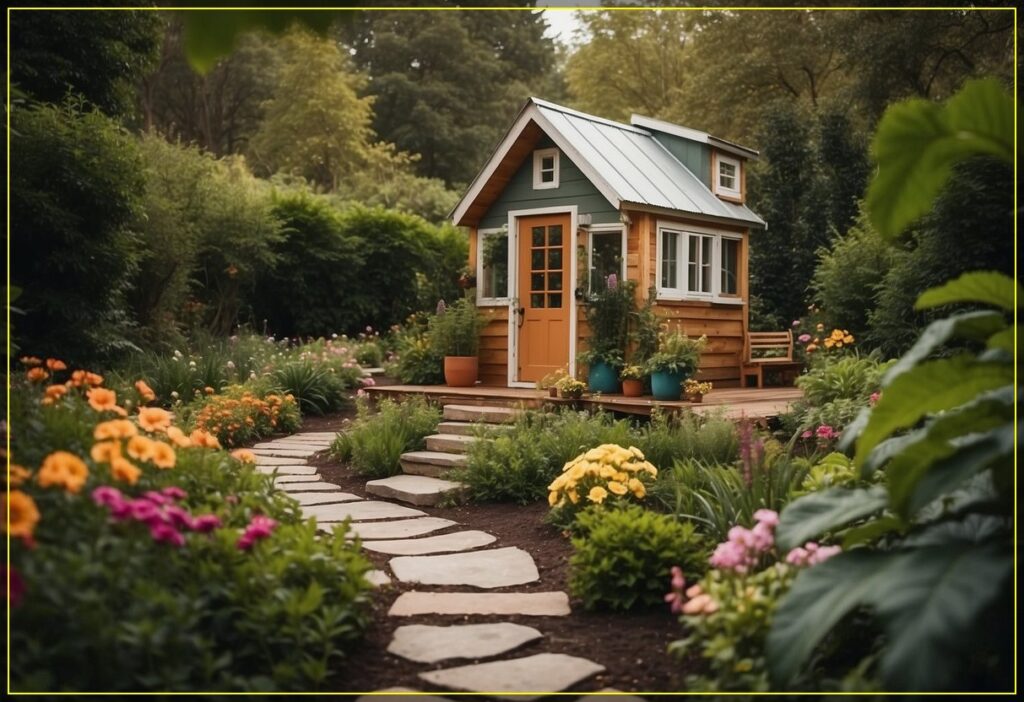
Tiny House Laws in Arizona: 2026 Guide
Tiny houses are legal in Arizona, but the rules are not the same across the state.
Your location matters. So does the type of tiny house you own.
A permanent tiny house may follow local building and zoning rules. A tiny house on wheels may face different rules. Rural properties can also have rules for water and septic systems.
Here is what you need to know about tiny house laws in Arizona in 2026.
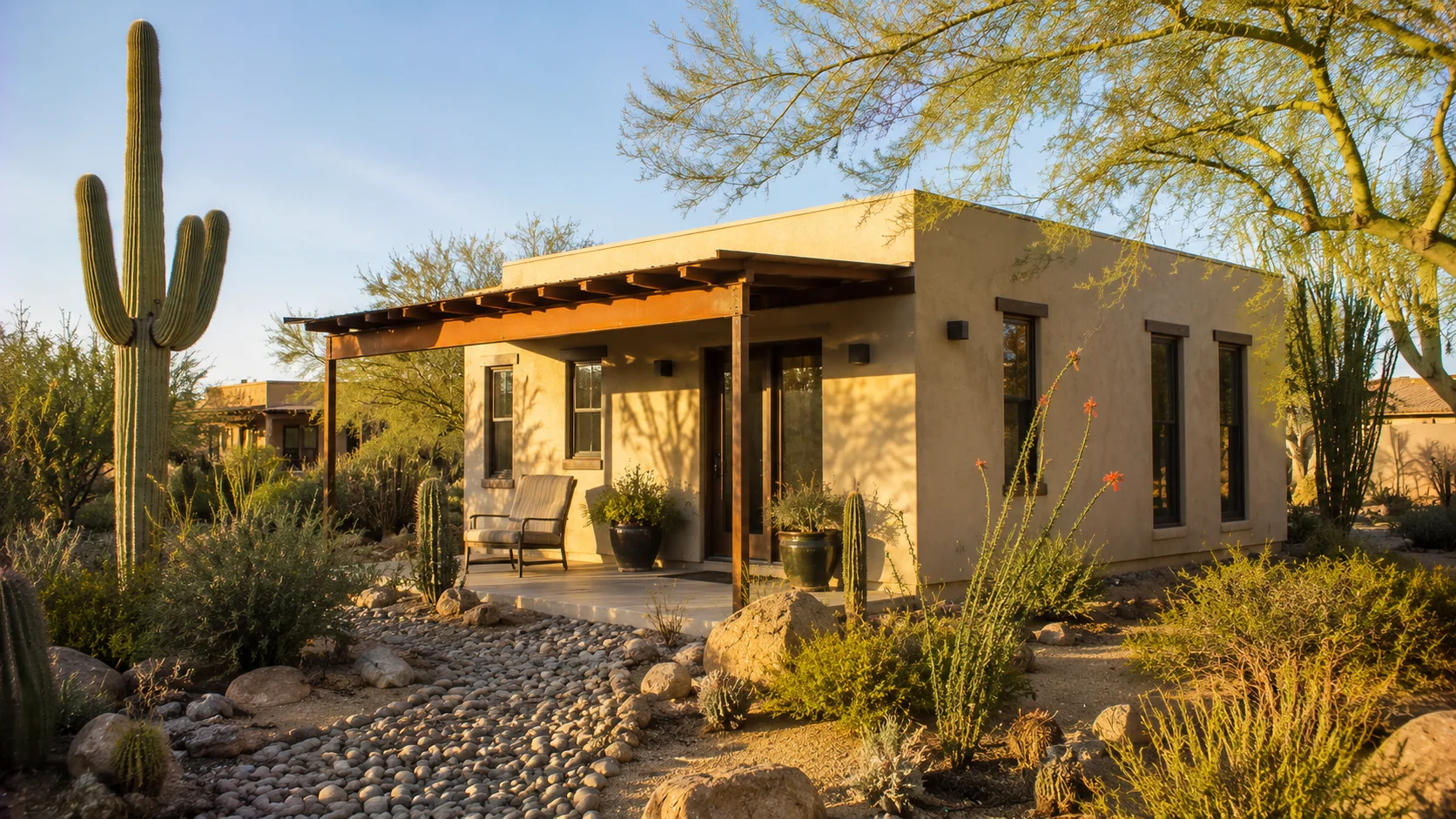
Are Tiny Houses Legal in Arizona?
Yes. You can legally live in a tiny house in Arizona if the home and property meet the rules that apply in your area.
Arizona does not have one simple tiny house law for every property.
Cities and counties may set their own rules for land use, setbacks, permits, and home size. This means a tiny house allowed in one area may not work in another.
Always check the rules for the exact property before you buy land or a home.
Do You Need a Permit for a Tiny House?
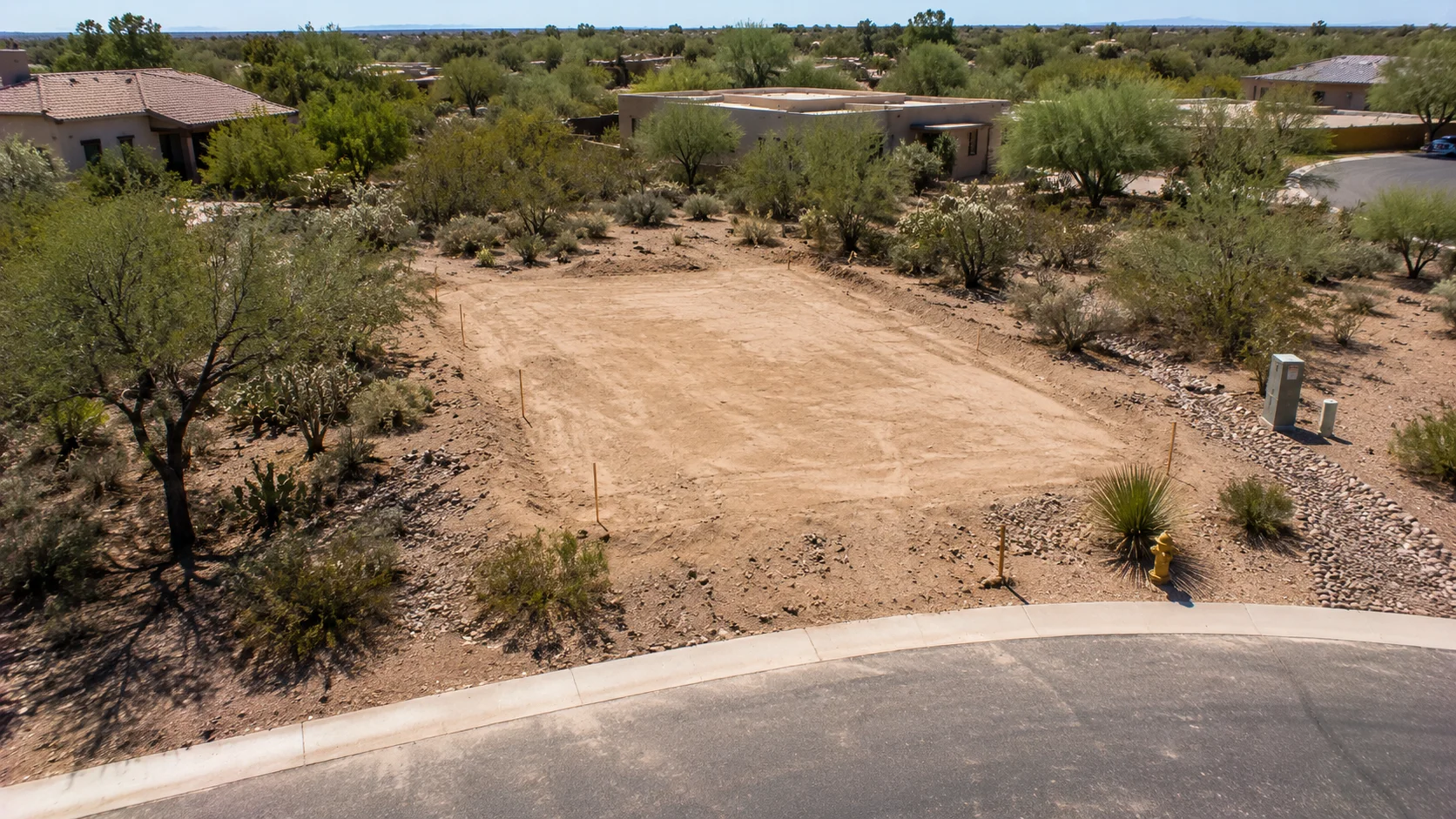
You will usually need permits if you build or install a permanent tiny house.
The exact permits depend on the location and project.
Check the local rules for:
- Building permits
- Zoning
- Setbacks
- Foundations
- Plumbing and electrical work
- Water
- Sewer or septic systems
Do not trust a property listing just because it calls the land “unrestricted.” Check with the city or county first.
Tiny Houses on Permanent Foundations
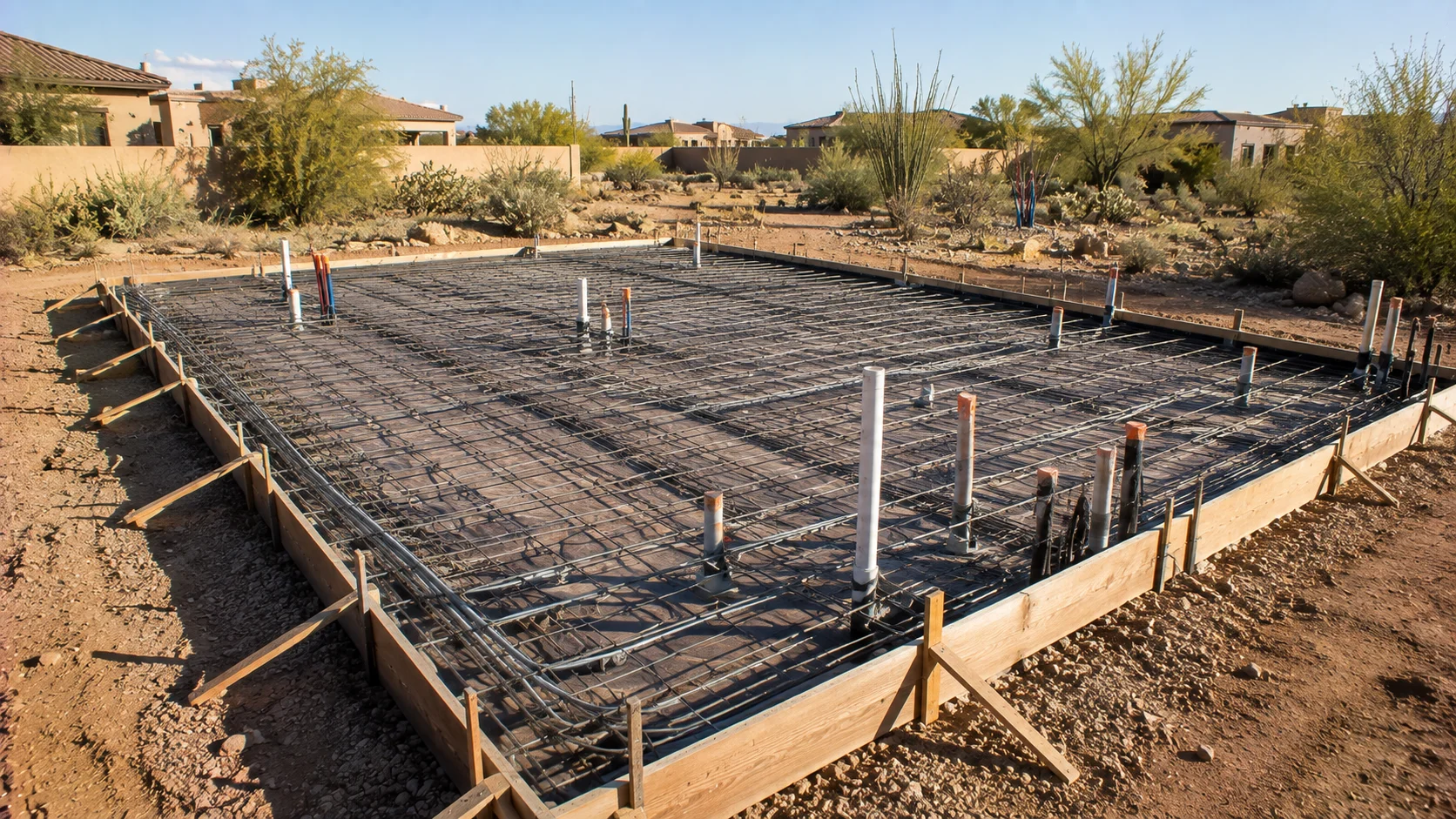
A permanent foundation can provide a clearer path to legal full-time living.
The home must meet the building rules that apply at the property. It also needs to comply with local zoning and land-use rules.
Arizona has separate state rules for factory-built buildings.
The Arizona Department of Housing requires factory-built modules installed in the state to carry an Arizona Modular Certificate. Installation also requires approved plans, permits, inspections, and a proper foundation.
A certificate of occupancy is required before you can occupy a residential factory-built building.
Tiny Houses on Wheels in Arizona
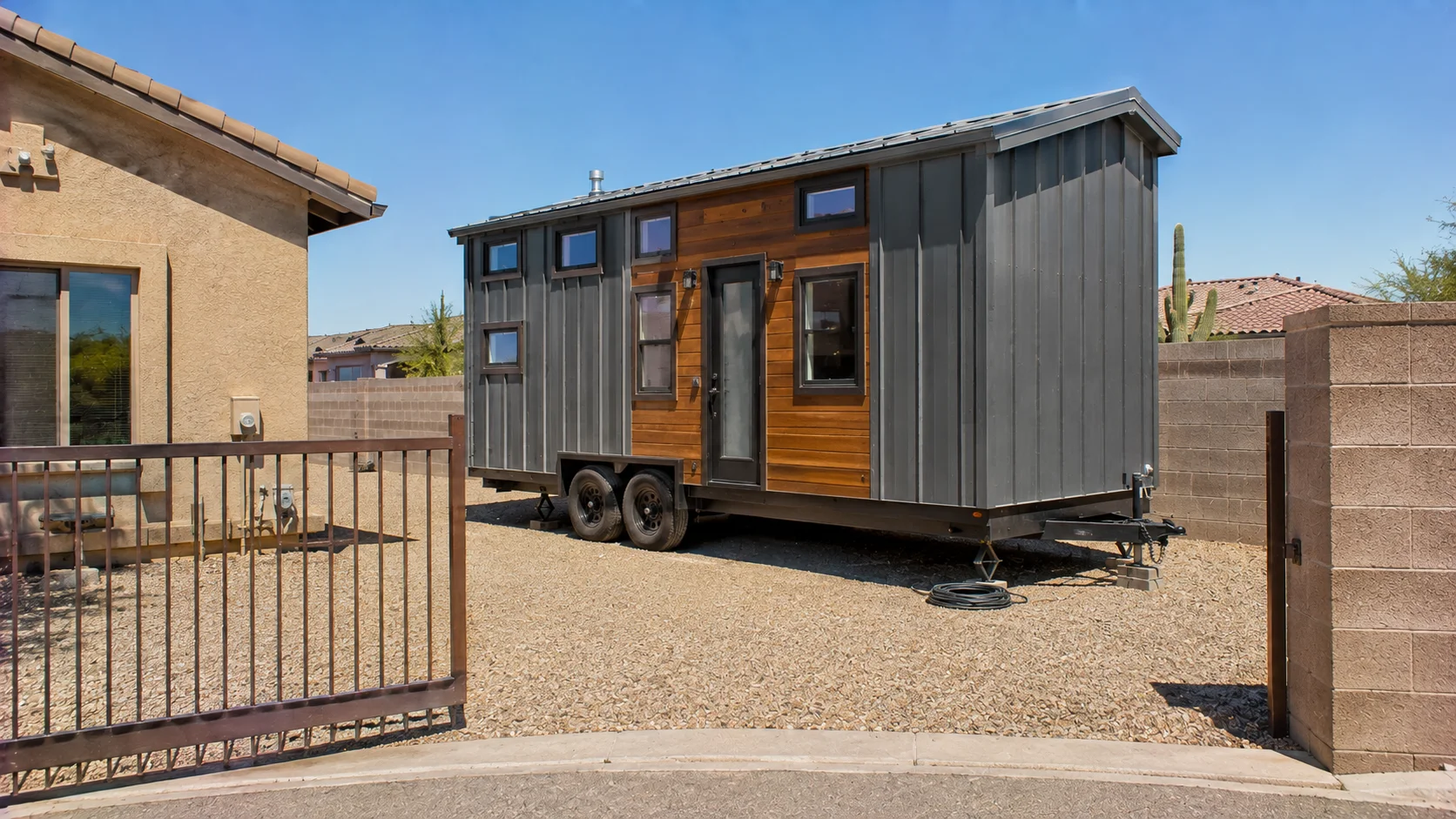
A tiny house on wheels (THOW) can be more difficult.
Do not assume that you can live in one anywhere just because it has wheels.
Local rules may treat the unit differently from a permanent house. Where you can park it and whether you can live in it full-time are separate questions.
Before buying a THOW, contact the local planning department.
Ask whether you can place that type of unit on the property and use it as a full-time home.
This simple check can save you from buying a house that you can park legally but cannot legally live in.
Factory-Built and Manufactured Homes
“Factory-built,” “manufactured,” and “tiny house” do not always mean the same thing.
Arizona regulates factory-built buildings and manufactured homes through the Arizona Department of Housing.
Factory-built installations need an approved installation plan and a permit. A licensed installer or contractor must complete the required work. Inspections are also required.
If you buy a home from a builder, ask how Arizona legally classifies it. Do this before you pay a deposit.
The marketing name on a website does not decide the home’s legal status.
Septic Rules for Rural Tiny Houses
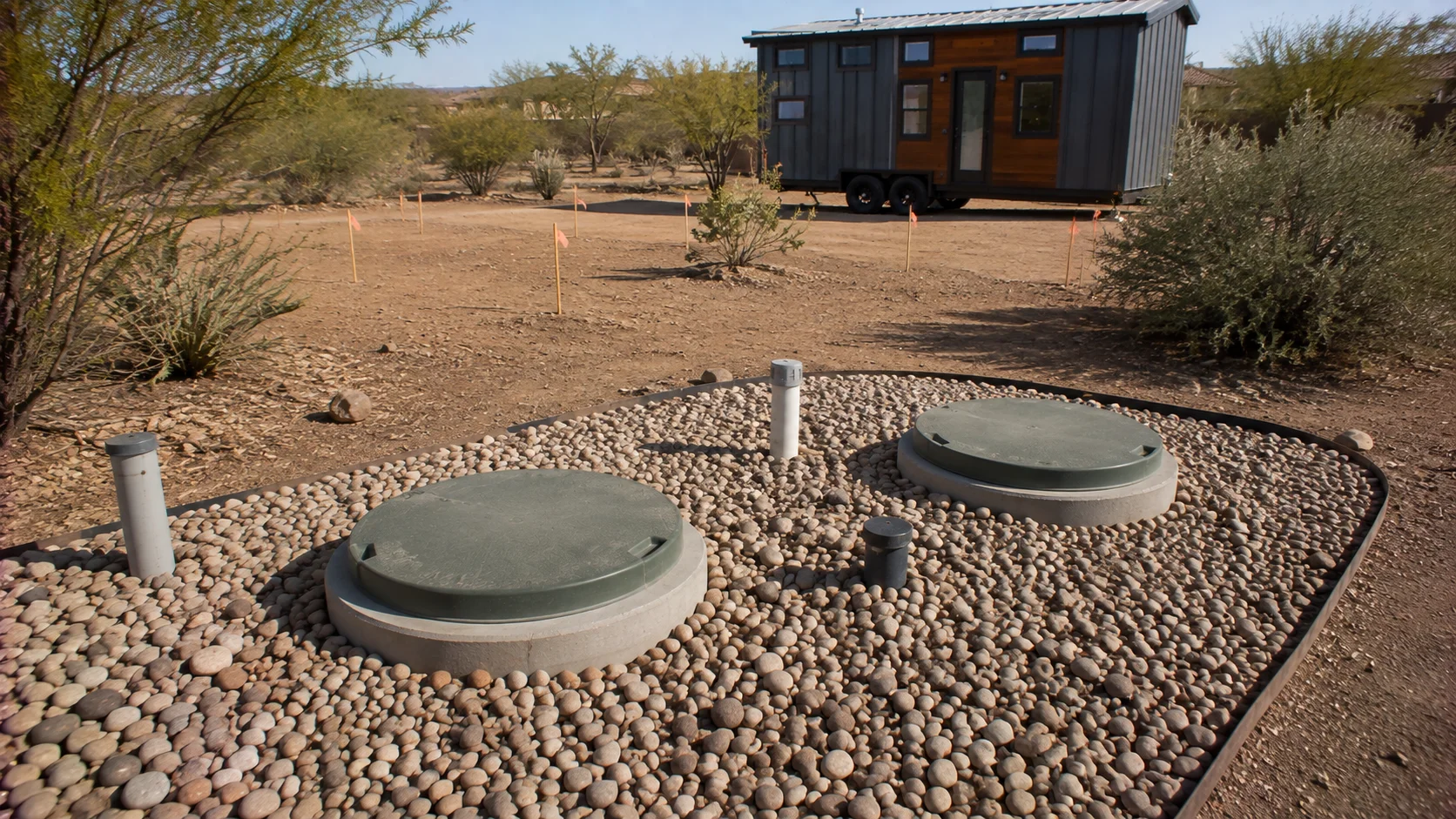
Many rural Arizona properties do not connect to a public sewer.
In that case, you may need an onsite wastewater system, often called a septic system.
The Arizona Department of Environmental Quality oversees these systems. It has delegated most permitting work to Arizona’s 15 counties. You normally apply through the county where the property is located.
Arizona has permits for conventional septic systems and several other types of onsite systems. The state also has a permit category for composting toilets.
Do not buy rural land before checking whether the site can support the wastewater system you need.
What About Water?
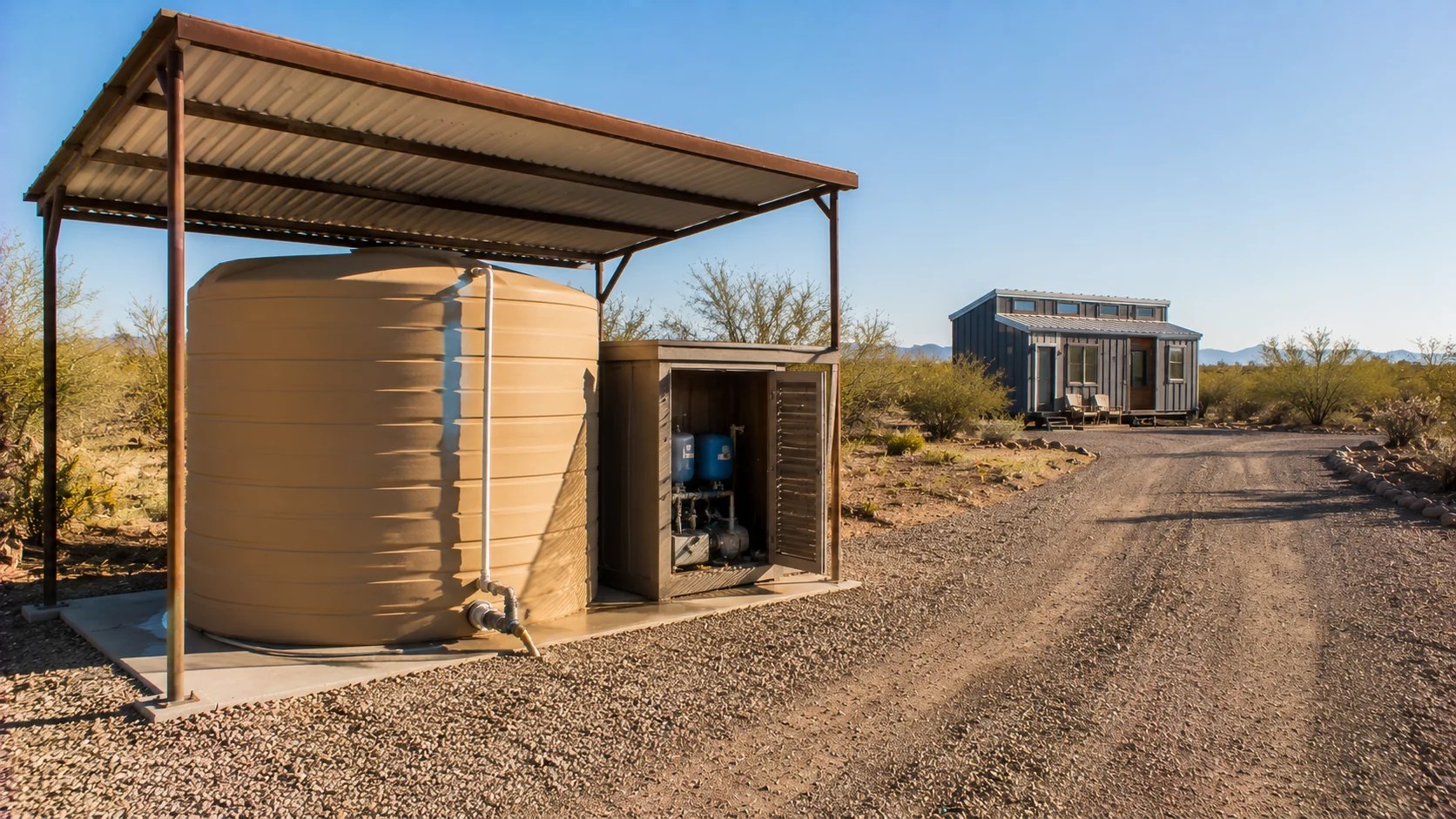
Water can be just as important as zoning in rural Arizona.
Before buying land, find out how you will supply the home with water.
Some properties use a water provider. Others may use a private well or another legal water source. In some rural areas, owners may depend on hauled water.
Do not assume that a cheap parcel already has an easy water solution.
Check the source, storage needs, costs, and local requirements first.
Can You Live Off-Grid in Arizona?
Yes, off-grid living may be possible.
But “off-grid” does not mean “no rules.”
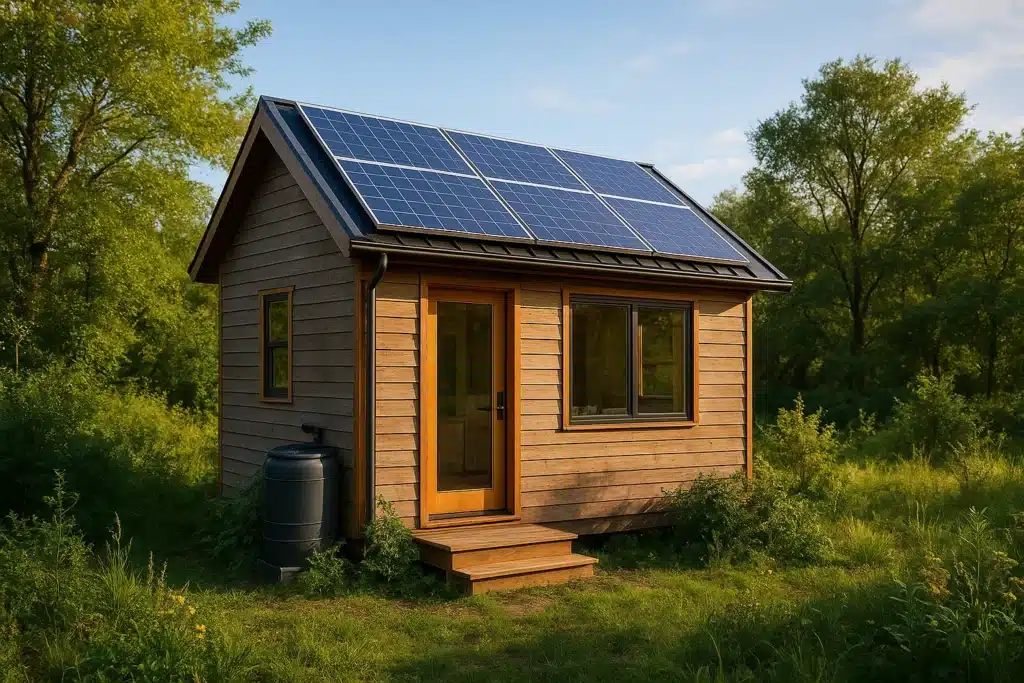
Solar panels can provide electricity, but they do not remove zoning or building requirements. You still need a legal solution for water and wastewater.
The property must also allow the type of home and residential use you plan.
Can You Live in a Tiny House Full-Time?
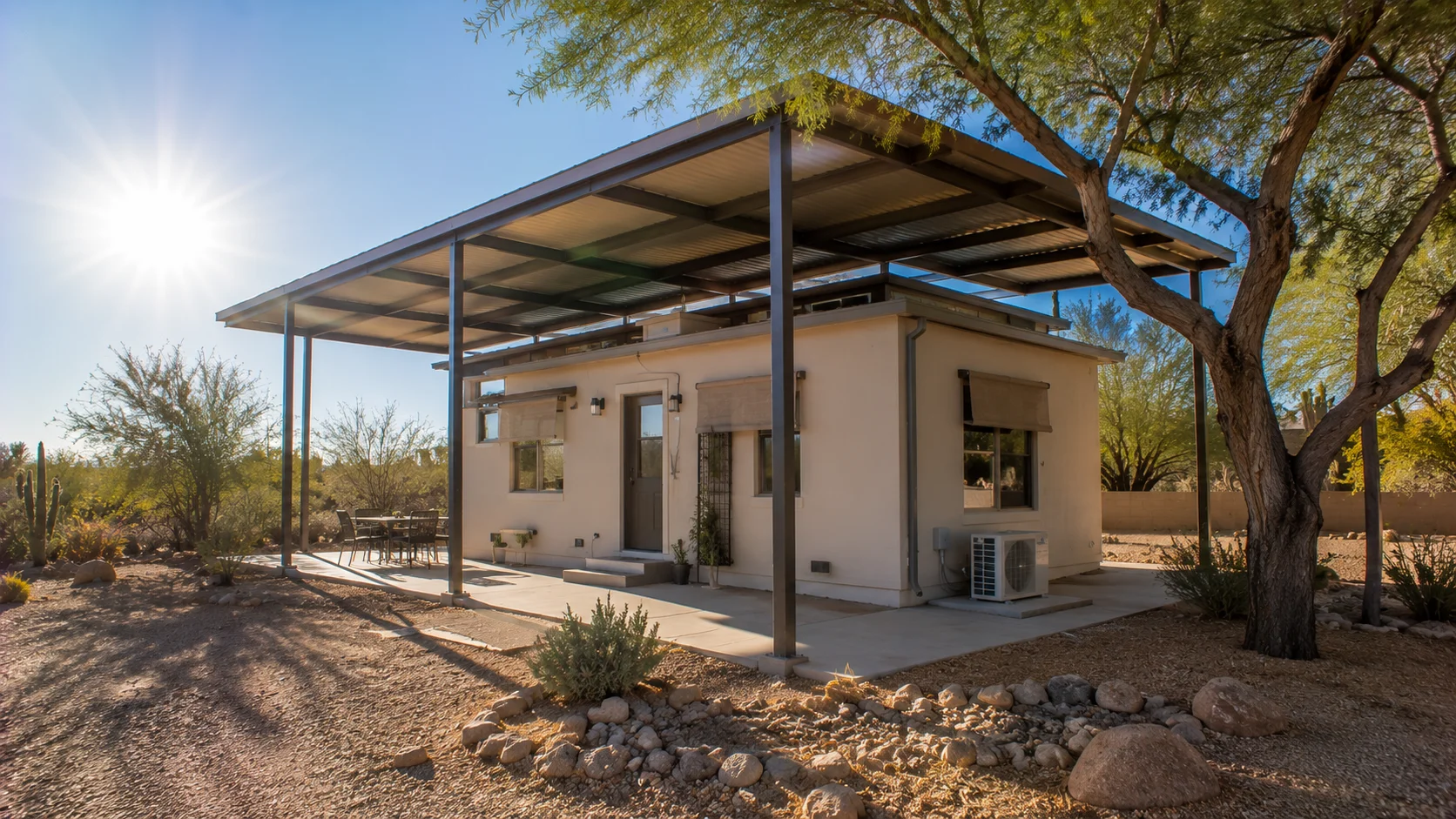
Yes, you can live in a tiny house full-time in Arizona when the home and property meet the required rules.
A permanent home on an approved residential site usually gives you the clearest path.
A THOW needs more research. Confirm both where you can place it and whether local rules allow full-time occupancy.
Final Thoughts
Arizona can be a good state for tiny house living, but do not assume rural land has no rules.
Check the property before you buy the tiny house.
Confirm zoning, permits, home classification, water, septic, utilities, and full-time residential use.
Once those pieces work, you can choose a tiny house that actually fits the property instead of trying to force the property to fit the house.
This article provides general information and is not legal advice.