


Eco-Friendly Tiny House Design Ideas That Save You Money
If you’ve been dreaming about building or living in a tiny house, chances are you’ve already thought about two big goals: saving money and living more sustainably. The positive side? The two goals complement each other very well. Environmentally friendly options are not only beneficial to the earth—their usage also leads to the reduction of energy bills, less upkeep, and the construction of a house that last even longer.
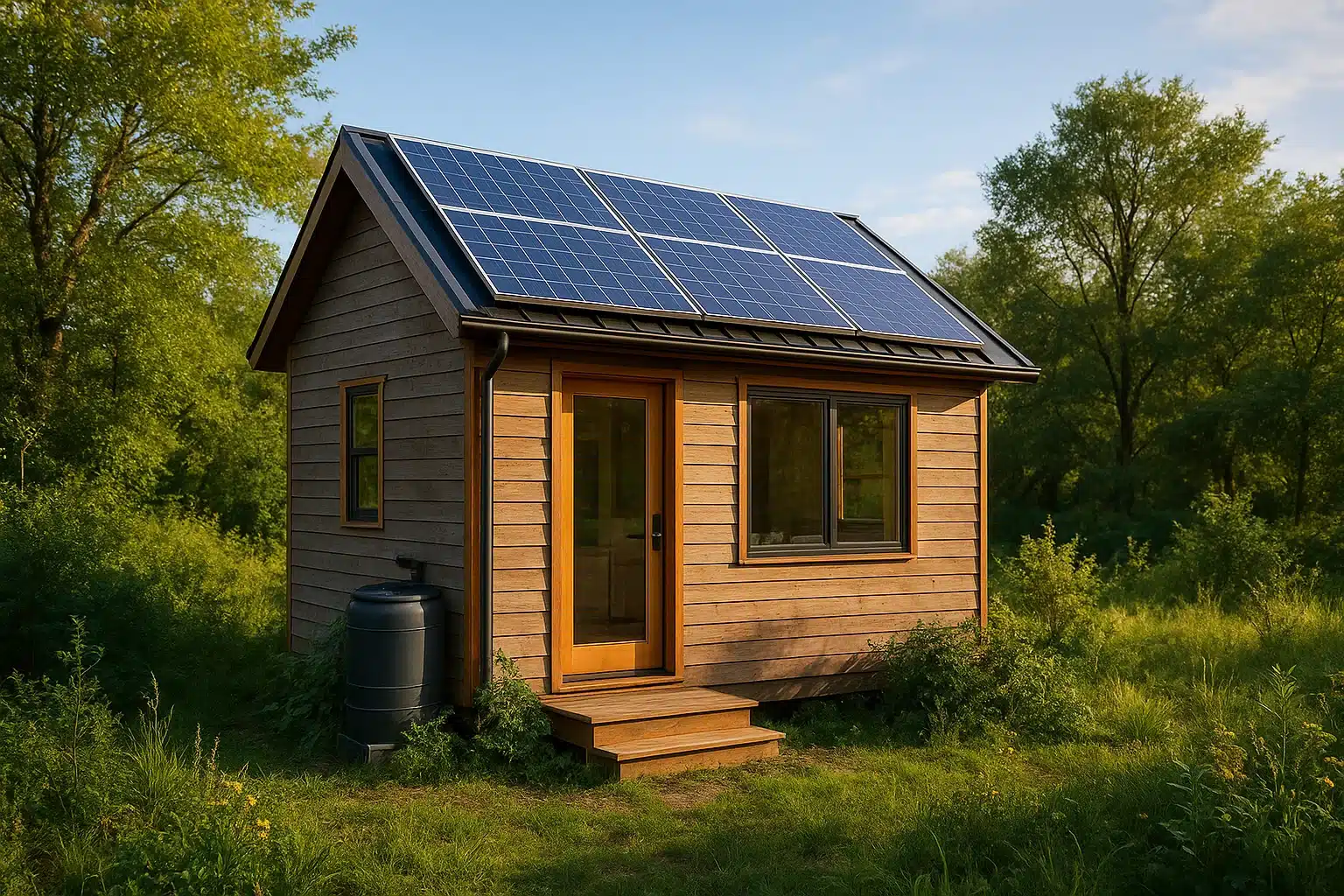
Thus, today we’ll be discussing the most practical eco-friendly tiny house design ideas that would reduce your costs from the very start. The tips are applicable through all phases of your tiny home’s life, whether you are still in planning or already building—that is, the tiny home can be made more efficient, more comfortable, and less expensive to live in through these measures.
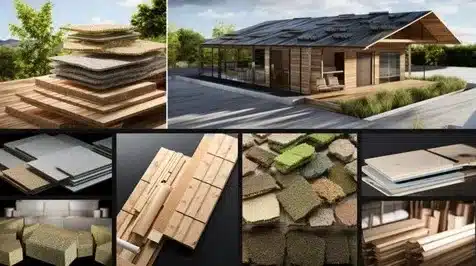
1. First Use Green, Low-Cost Building Materials
One of the best options for going green and saving money is to use affordable and sustainable materials. A tiny house requires less material in general, hence, the transition to greener options is much more financially accessible compared to traditional homes.
Reclaimed Wood
Taking reclaimed wood from barns, old houses, or salvage yards not only adds character but also prevents perfectly useful materials from being dumped into landfills. It’s often cheaper—and much stronger—than new wood.
Why it saves you money: You can use first-class materials at the same price as ordinary ones.
Bamboo
Bamboo is one of the most eco-friendly materials on earth because it is light, strong, and grows quickly. It’s great for flooring, cabinetry, and even wall panels.
Recycled Metal
Roofing or exterior siding made from recycled steel or aluminium lasts decades and requires almost no maintenance.
Bonus: Metal roofs work great with rainwater collection systems.
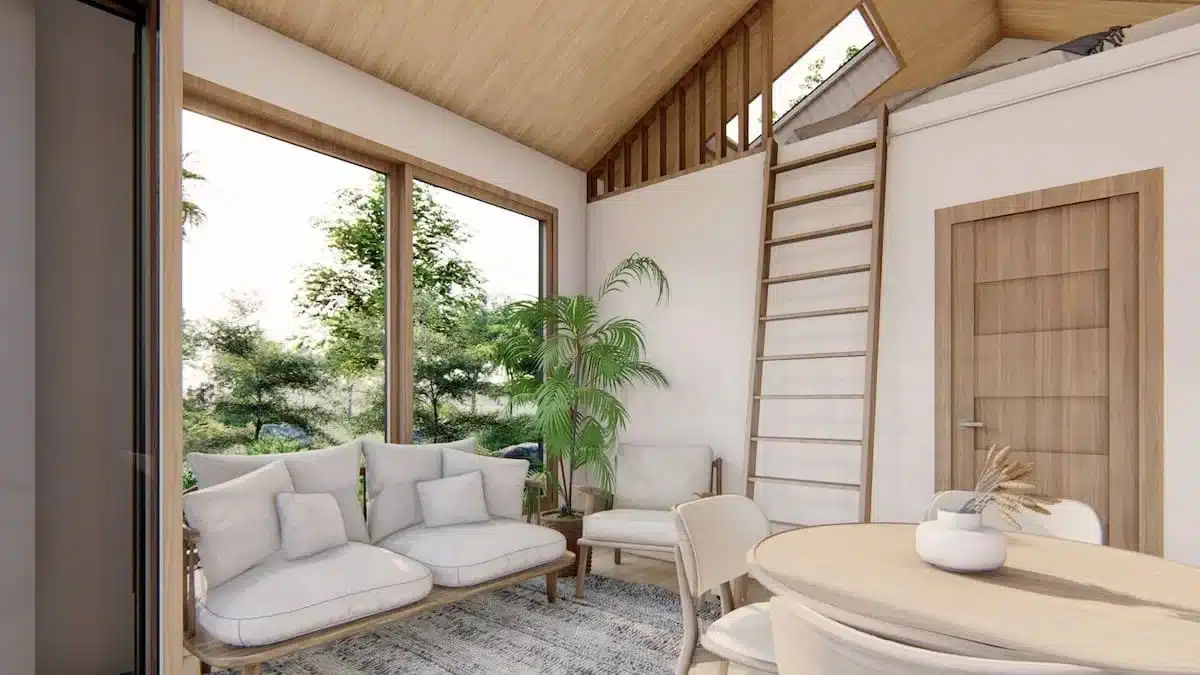
2. Maximize Natural Light to Cut Energy Costs
Electricity costs add up fast—even in a tiny home. The more natural light you bring in, the moins you’ll rely on artificial lighting.
Use Large Windows (Strategically)
You don’t need floor-to-ceiling glass walls, but placing windows on the south-facing side (if you’re in the Northern Hemisphere) brings in the most year-round light and warmth.
Install Skylights or Solar Tubes
Skylights are amazing in tiny houses where wall space is limited. They illuminate small areas and give the impression of being larger.
Operable skylights ensure a good airflow, thus being a big factor in the elimination of the use of fans or the air conditioning units, so the big saving tip is that.
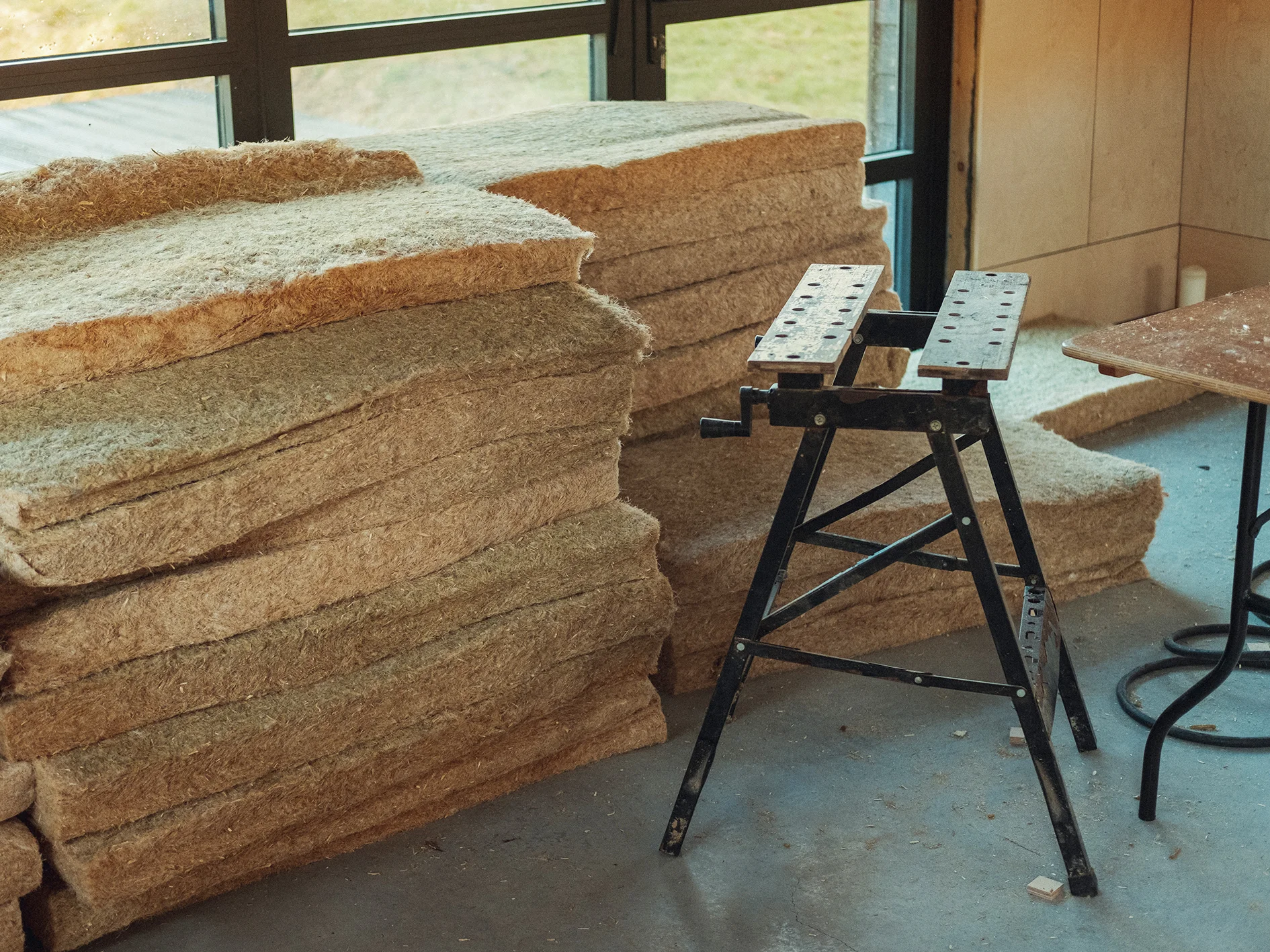
3.Switch to the top insulation to get giant energy savings
In every home, insulation remains one of the greatest long-term money savers. In a small house, however, it is necessary because rapid heating of the space makes it uncomfortable.
Friendly to the planet insulation materials
- Wool from sheep – naturally moisture resistant and its effectiveness is very high
- Cellulose insulation – it’s made from recycled paper
- Cork insulation – renewable, soundproof, and long-lasting
- Spray foam (eco version) – choose the non-toxic, plant-based ones
If your insulation is good, you won’t need to heat or cool your home as frequently and that will lead to reduced utility bills throughout the year. For more information check here: Best Insulation for Tiny Homes in All Climates | Energy-Efficient Solutions
4.Invest in Energy-Efficient Windows and Doors
The windows and doors of tiny homes are the main areas through which heat escapes and not the walls. Investing in energy-efficient double-pane windows or insulated doors will keep your house cozy without heavily relying on your heater or air conditioner.
Indeed, they are more expensive initially, but the difference in energy bills and better temperature regulation make them recover their cost quickly.
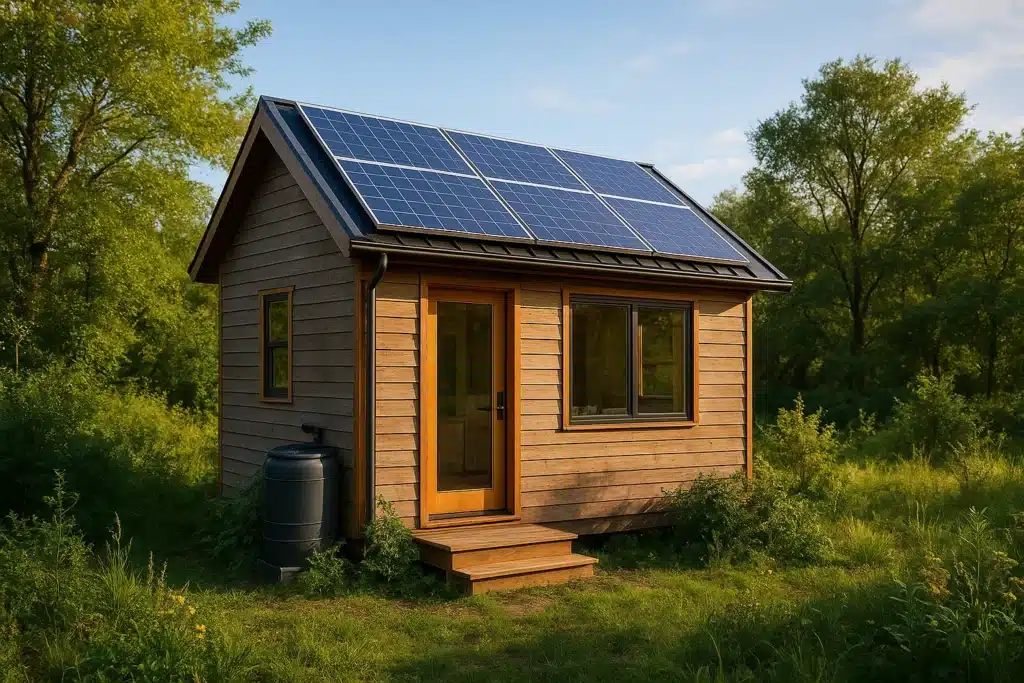
5. Go Solar to Cut or Eliminate Your Electric Bill
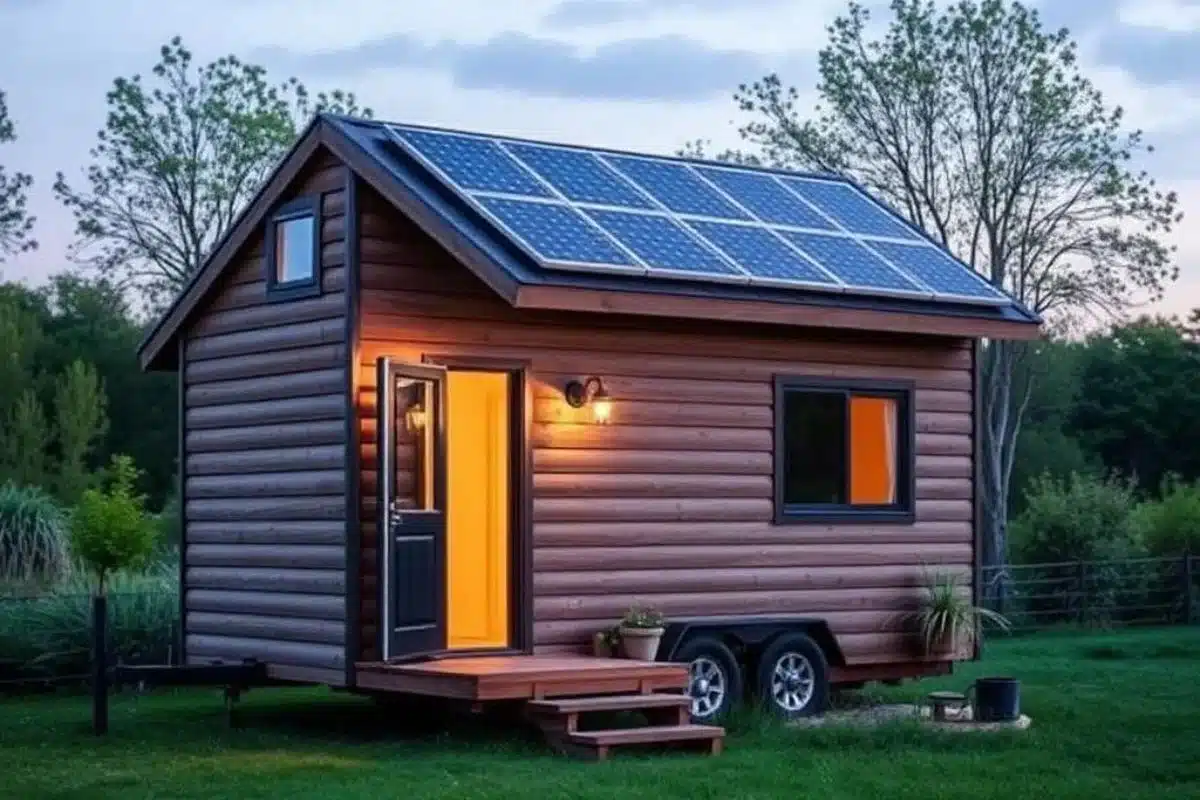
Solar energy is one of the biggest money-saving upgrades you can make. And since tiny homes have lower energy needs, you don’t need a huge system.
Types of Solar Installations
- Roof-mounted panels – standard, efficient, long-lasting
- Ground-mounted panels – ideal if your roof is shaded
- Portable foldable panels – perfect for tiny homes on wheels
Even a small setup can power lights, chargers, small appliances, and more.
Extra Savings Tip: Combine solar panels with energy-efficient appliances to maximize output and minimize cost.
6. Use Rainwater Harvesting Systems
If you want to reduce your water bill—or live off-grid—a rainwater system is a smart eco-friendly upgrade.
How It Works
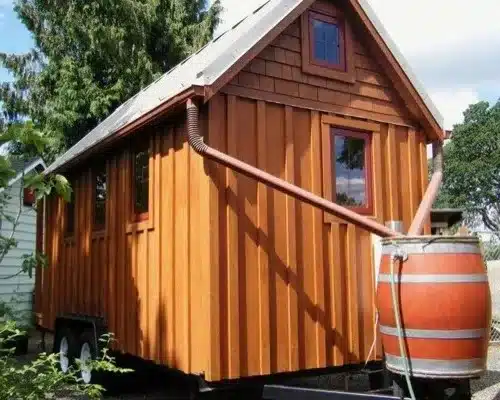
Your roof collects rainwater → gutters channel it → a tank stores it → filters make it safe for drinking.
Even in moderate rainfall areas, you can gather hundreds of gallons a month.
Why it saves money:
You rely less on municipal water, and filtered rainwater is basically free.
7. Create a Passive Heating and Cooling Strategy
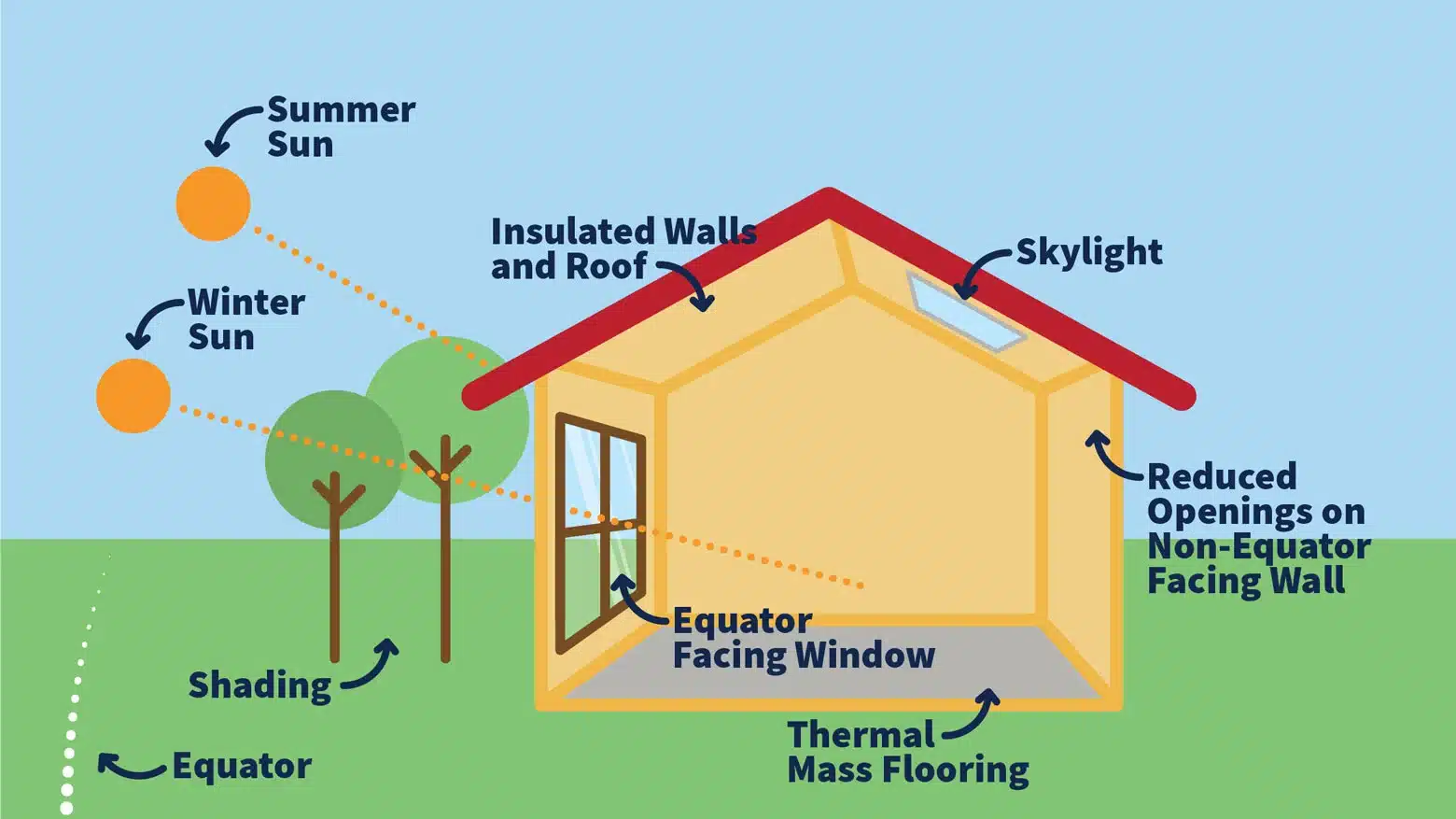
Tiny homes heat up and cool down quickly, so using passive design strategies makes a huge difference.
Passive Heating Ideas
- South-facing windows
- Dark-coloured floors that absorb heat
- Thermal curtains
- Insulated window coverings for winter
Passive Cooling Ideas
- Window placement for cross-breezes
- Shade awnings
- Light-coloured exterior paint
- Vented skylights
- Strategic roof overhangs
This reduces your need for heaters and AC, saving money and energy.
8. Choose Energy-Efficient Appliances
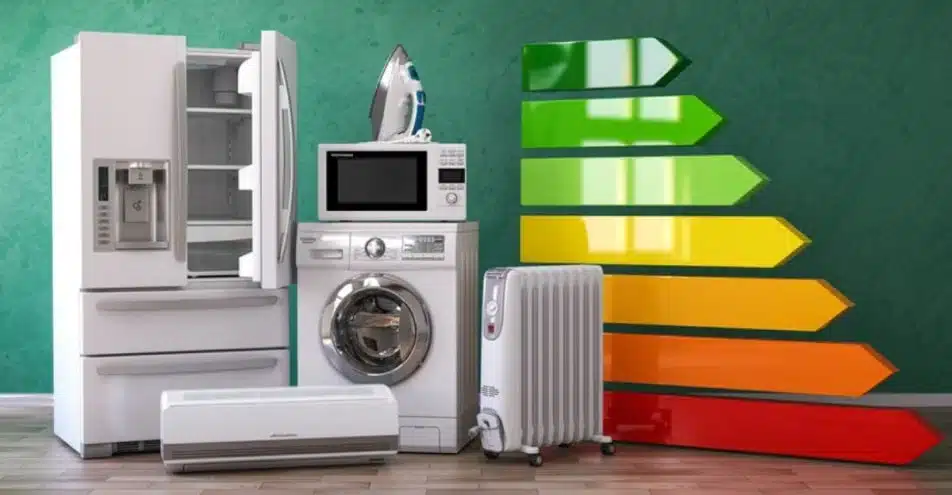
Since you’re working with limited space and power, it makes sense to choose appliances designed to run with minimal electricity.
Best Eco-Friendly Appliance Options
- Mini-split heat pumps
- Energy Star refrigerators
- Induction cooktops
- Low-flow showerheads
- Compact washing machines
- Propane or solar-powered water heaters
These choices keep energy use low without sacrificing comfort.
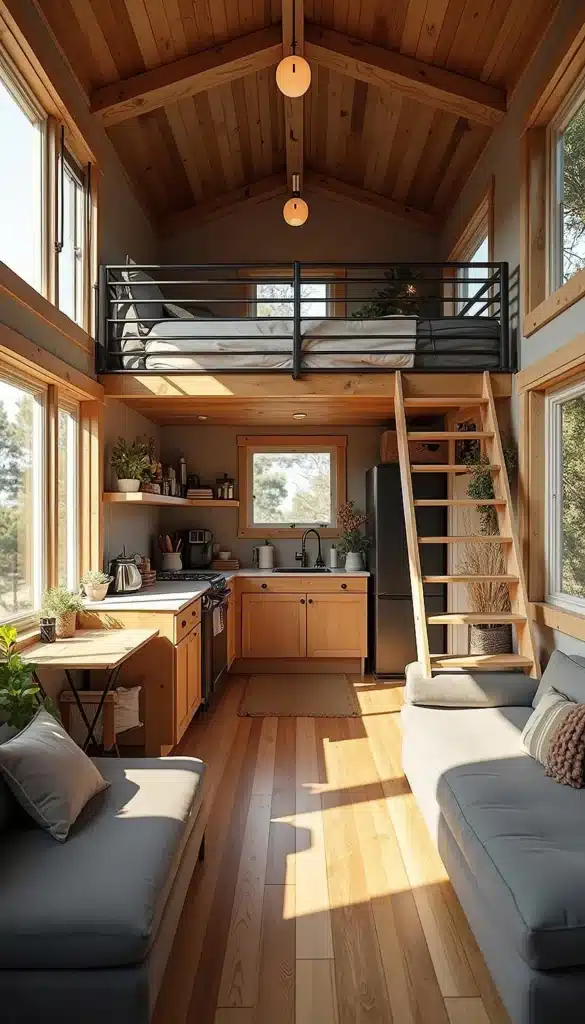
9. Use Space-Saving, Multifunctional Furniture
Eco-friendly design isn’t just about materials—it’s also about building smarter so you don’t need to buy as much stuff.
Examples of Space-Saving Furniture
- Murphy beds or loft beds
- Fold-down desks
- Storage benches
- Convertible sofa-beds
- Lift-top tables
- Under-stair drawers
The more multifunctional your furniture is, the less you spend on extra pieces. For more information check here: 5 Clever Tiny House Storage Hacks That Maximize Space Without Sacrificing Style
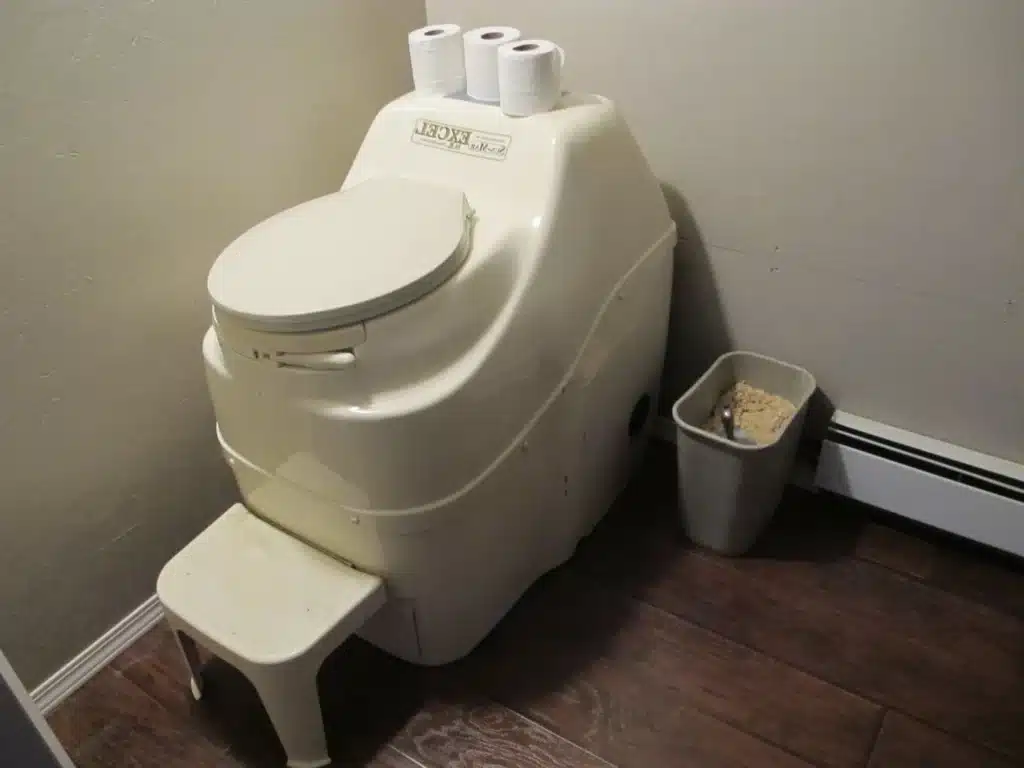
10. Install Composting or Low-Water Toilets
Water waste adds up fast, but tiny homes have great alternatives.
Composting Toilets
These use little to no water, reduce septic needs, and are surprisingly odor-free when maintained properly.
Low-Flow Toilets
If composting isn’t your style, a low-flow option still cuts water use by more than half.
Money Saver Tip: Lower water use means a lower water bill—or none at all if you’re off-grid.
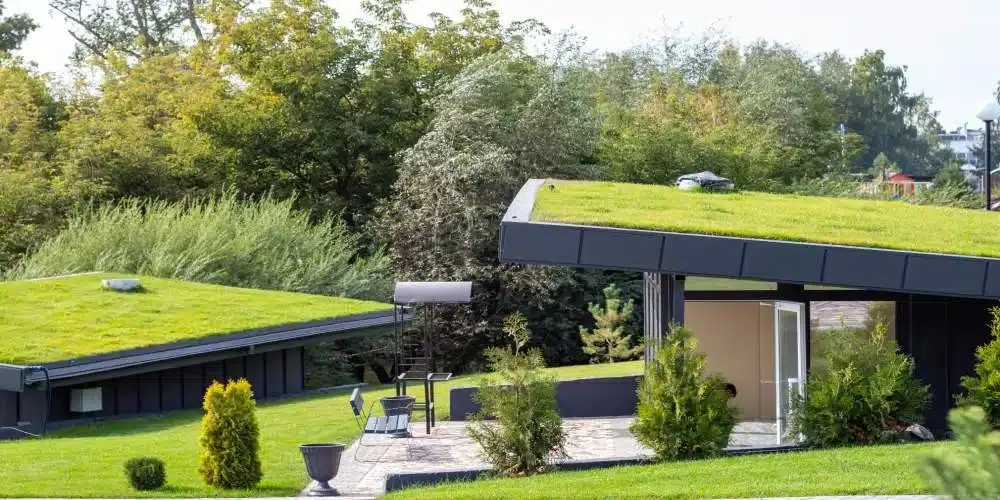
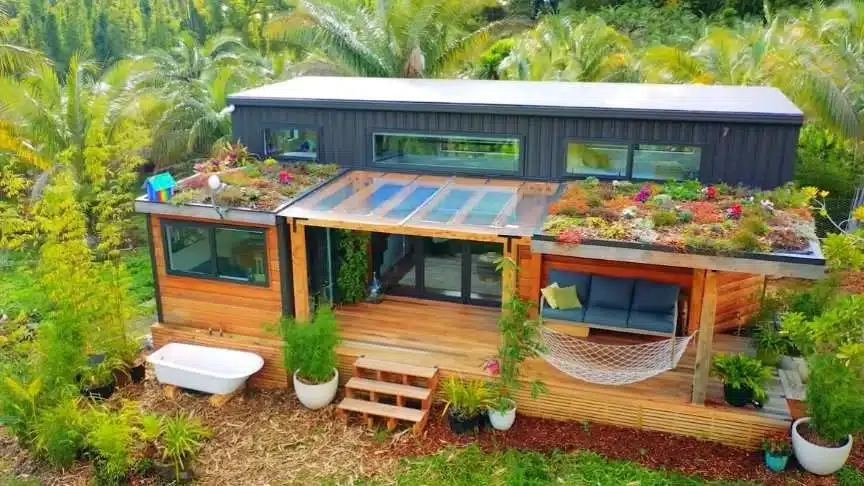
11. Choose a Green Roof or Living Wall
If you like going all-in on eco-friendly design, a living roof or wall can be a beautiful and functional feature.
Benefits
- Natural insulation
- Rainwater absorption
- Reduced heat in summer
- Increased lifespan of roofing materials
- Extra growing space for herbs + veggies
While these systems require a little more planning, they’re excellent long-term money savers, especially for climate control.
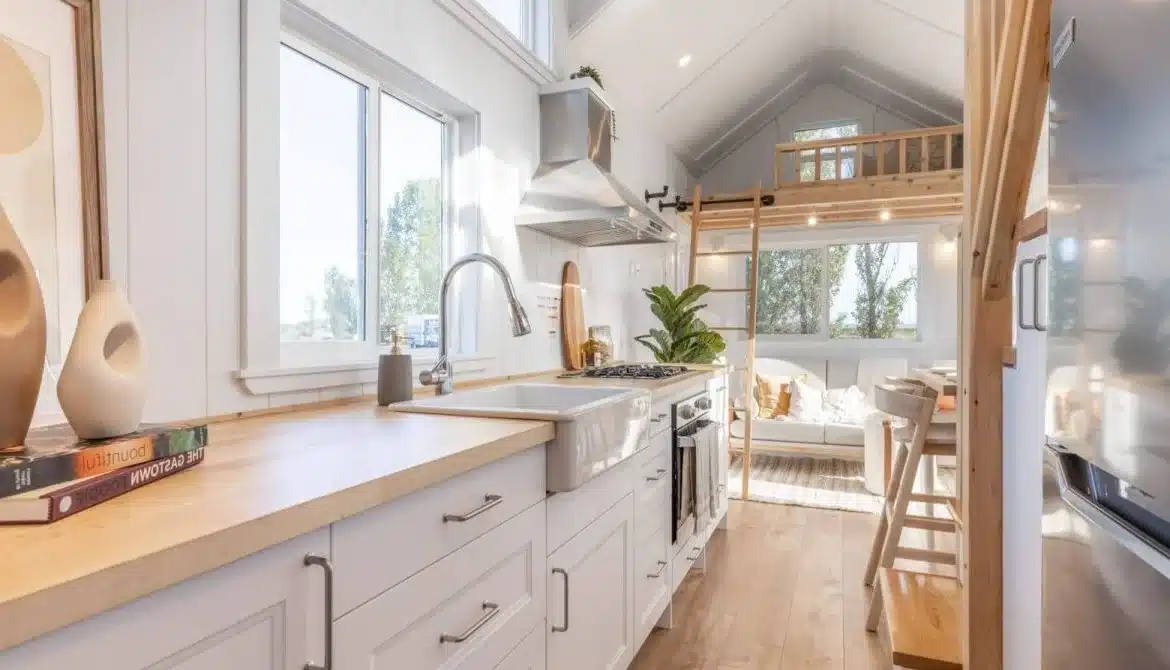
12. Build a Small, Energy-Efficient Kitchen
A tiny home kitchen doesn’t need to sacrifice functionality. Focus on eco-friendly choices that help you save money long-term.
Ideas
- Install LED lighting
- Choose energy-efficient appliances
- Use recycled or reclaimed countertops
- Add open shelving (less material = lower cost)
- Pick a low-flow faucet
- Keep layouts simple to reduce building costs
A smaller kitchen naturally saves resources—and encourages more intentional living. For more information check here: Genius Tiny House Kitchen Ideas to Maximize Space Without Sacrificing Style!
13. Grow Food With a Micro Garden
Even a tiny house on wheels can grow fresh herbs and veggies. Planting a micro garden helps reduce grocery bills and your environmental footprint.
Easy Options
- Vertical wall garden
- Window boxes
- Hanging herb planters
- Small raised beds if you’re stationary
- Hydroponic tower garden
Fresh food, zero packaging, and lower costs—it’s a win all around.
Final Thoughts: Eco-Friendly Tiny Homes Save Money in the Long Run
Designing an eco-friendly tiny house isn’t about spending more—it’s about planning smarter. Every eco-conscious choice you make, from insulation to appliances, pays you back through lower bills, a healthier home, and less environmental impact.
Tiny homes prove that living sustainably doesn’t have to be complicated or expensive. With the right design ideas, you can build a beautiful, functional, and energy-efficient home that saves you money for years to come.



You ought to be a part of a contest for one of the
best websites online. I most certainly will recommend this site!
Wow, thank you so much—that truly means a lot! We’re really glad you’re enjoying the site, and your recommendation is the best compliment we could ask for.
If you’d like to keep discovering new content and updates, feel free to subscribe and be part of our growing community. Thanks again for the support!
Warm regards,
Team TopTinyHouse.
Your go-to best water heater repair company Chicago offers affordable water heater technician services for residential water heater repair and water heater maintenance Chicago IL. Get emergency hot water repair Chicago and water heater not heating repair today.
Редкая пост, и сам только что исследовал по
этой теме??
Yeah, it’s a pretty rare topic I actually just started exploring it myself.
If you’re interested, feel free to subscribe — more content like this coming.
Warm regards,
Team TopTinyHouse.
Реально информативная заметка, буквально
вчера исследовал ей теме!
Thank you so much! I’m really glad you found the article informative, especially if you’ve been exploring this topic recently. It means a lot to know it was helpful.
If you’d like to read more posts like this, feel free to subscribe so you don’t miss any future updates!
Warm regards.
Team TopTinyHouse.
The article is top-notch and easy to follow. This site has proven to be very useful time and time again.
Сохранил в закладки, ценю ваш блог!